
A game where two players wearing protective gear compete for victory by hitting or stabbing a specific part of their opponent with a bamboo sword according to certain rules.
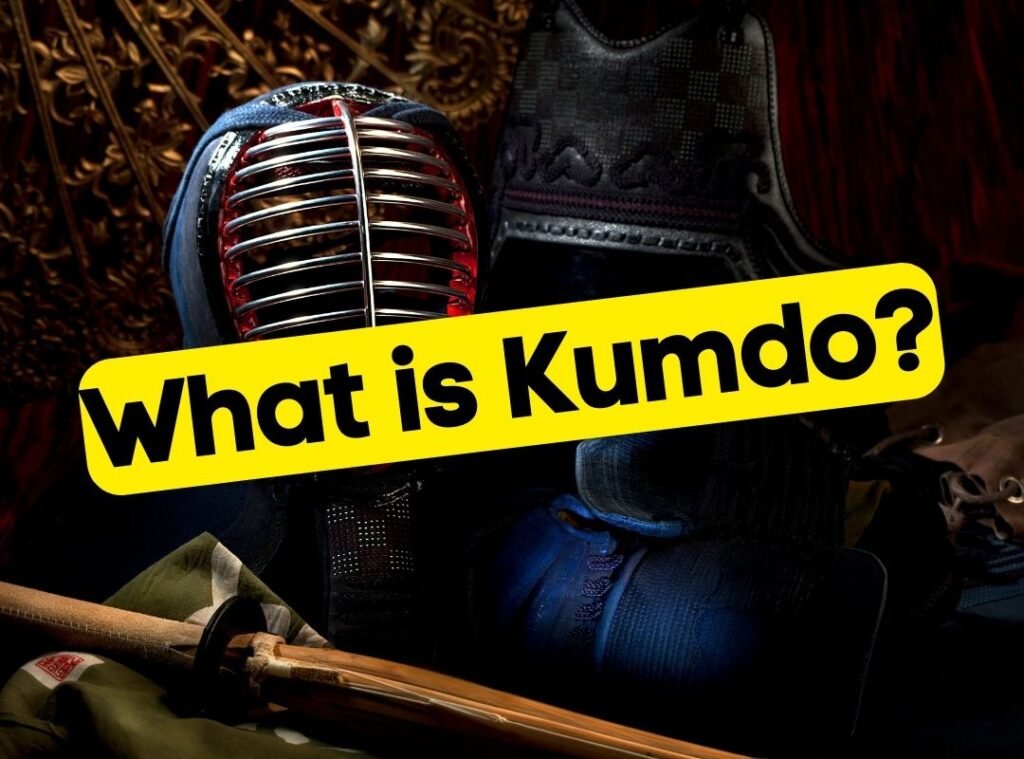
Kumdo is a martial art and sport that emphasizes quick action, bold spirit, and cold judgment.
It can be practiced by anyone, regardless of age or gender, and involves the use of a sword. Kumdo shares its origin and history with the sword, with a principle to call a sword with one side as Do (刀) and a sword with both sides Geom (劍), which have been mixed up for a long time.
Different countries have their own characteristics in swordsmanship, such as Bongukgeom (本國劍) in Korea, Waegum (倭劍) in Japan, and Wol-do (月刀) in China. Bongukgeom has been handed down by Hwarang since the Silla era and is also known as Silla-geom (新羅劍) or Singeom (新劍).
Kumdo experienced a decline due to the invention of gunpowder in the Goryeo era and Cheonmusasang (賤武思想) in the Joseon era. However, it began to revive after the Imjin War when a training gym was established for military training. Bongukgeom training was even included in the 24 Banmuye of “Muye Dobo Tongji (武藝圖譜通志)”, which was compiled by King Jeongjo.
Kumdo disappeared during King Gojong’s era when Western-style military training was adopted, but it began to spread again when Japanese-style kendo was introduced as a police and military training subject in 1896. Oseong School (五星學校) equipped with kumdo / kendo education facilities, guided general youth groups in 1916. Joseon Mudo-gwan was established in 1921, and from 1927, it was even adopted as a middle school subject.
After liberation, Kumdo was seen as a remnant of Japan and began to decline. However, in 1948, Jakyungyudanja (在京有段者) organized Daehan Geomsahoe (大韓劍士會) to maintain its lineage. They also established Gyeongchalsangmuhoe (警察尙武會) in 1949, with city and provincial branches. Daehan Geomsahoe was later renamed Daehan Kumdo Association (大韓劍道協會) in 1953 and became a member of the Korean Sports Association.
In 1965, the International Society of Human Kumdo / Kendo Club organized and held a world conference in Taiwan, and in 1969, the fourth conference was held in Korea and won second place in the team competition and first and third place in the individual competition under 5th dan. On April 4, 1970, Korea became a member country at the same time as the founding of the International Kumdo / Kendo Federation. At this time, Korea also participated.
Since then, they have been holding a competition every three years, and Lee Jong-rim (李種林) won third place in the individual event at the second competition held in San Francisco, USA, in 1973. In July 1979, Japan’s Sapporo In the fourth competition held in Korea, the Korean team won second place in the group event. On July 25, 1982, Korea won third place in the group event at the fifth competition held in Sao Paulo, Brazil. In 1988, they successfully hosted the seventh competition in Seoul and raised their status of Korean kumdo / kendo in the world kendo community. In this competition, they won second place in the group event and third place (Kim Kyung-nam) individually.
They entered the group runner-up in every competition until the 10th competition in 1998. The junior competition was held every three years from 1974, and Park Jung-chae (朴中彩) won the individual championship at the third competition held in Honolulu, Hawaii, in August 1980, but the competition was discontinued after three times.
There are about 10 domestic competitions, such as the National Sports Festival, the President’s Cup National General Kumdo Championship, the Lee Chung-moo Memorial Competition, the Liberation Day Memorial Competition, and the SBS Cup National Kumdo Wang Competition. Currently, it is widely distributed to students of all levels for police and prison officers.
The registered players in each city and province are 6,040 (as of 1998), and the stadium is a floor or flat ground with an area of 9-11m, including the partition line, and there must be more than 1.5m of margin on the outside. The line is white with a width of 5-10cm.
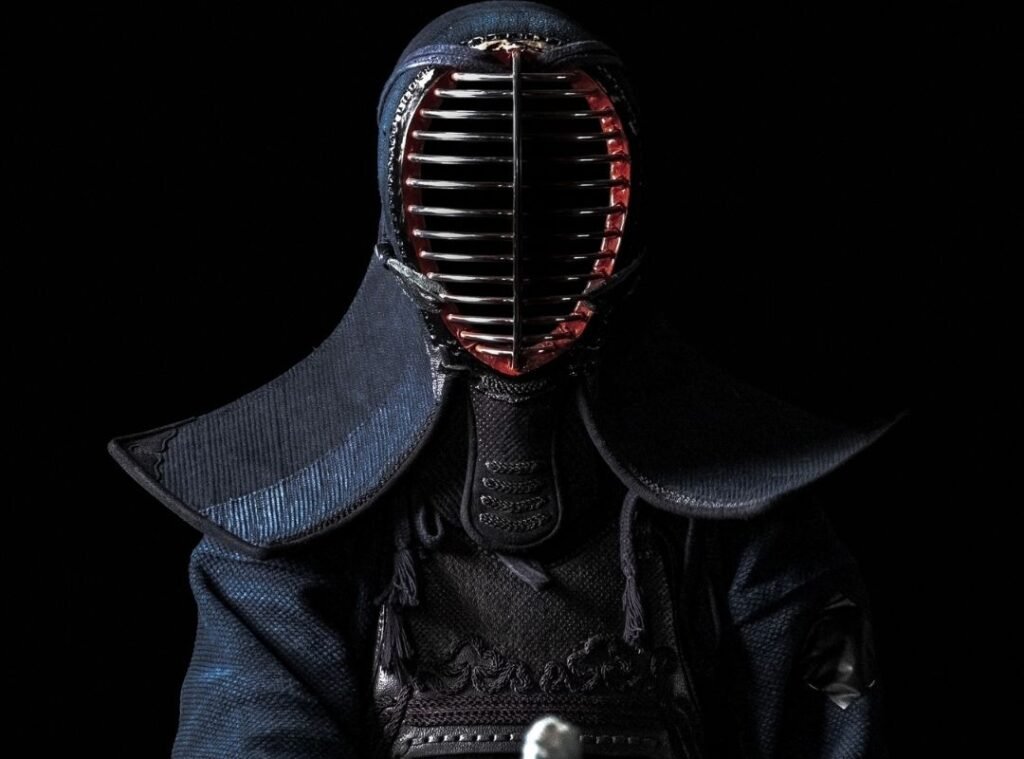
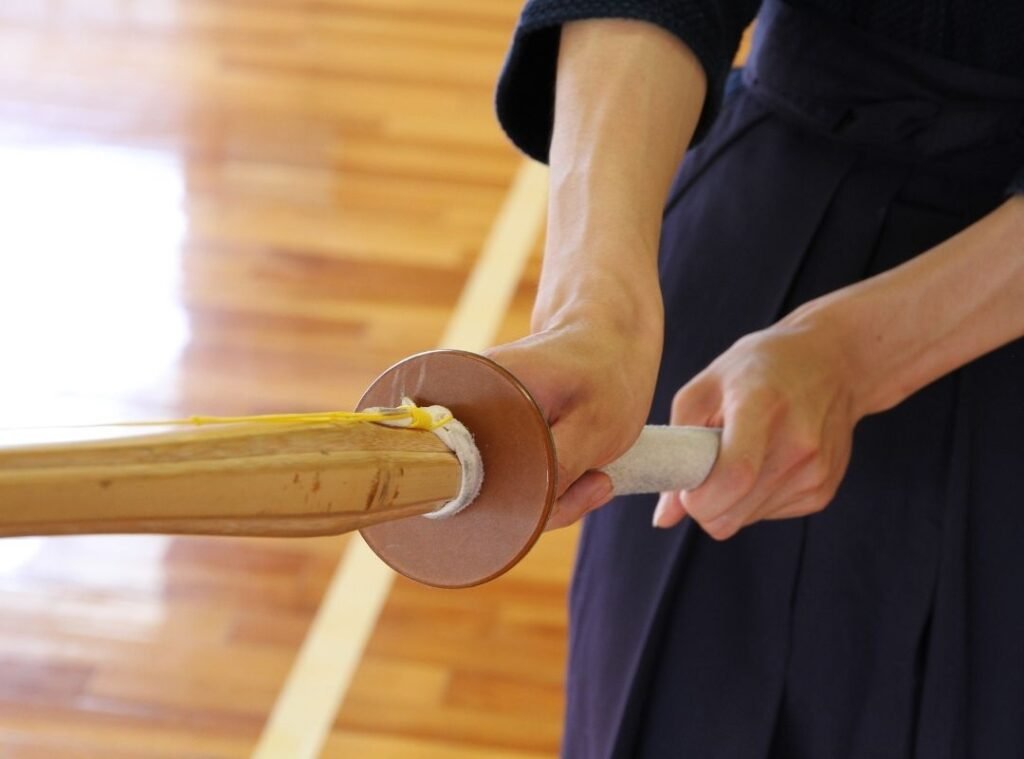
The equipment for the game are homyeon (protective mask), howan (protective arm), gap (armor), and gapsang (armor skirt). The training clothes are short-sleeved tops and long pants, and they use jukdo (bamboo sword). There are individual games and group games.
Individual games are based on three rounds, and the winner is the one who wins two rounds within the game time. However, if one side wins only one round within the limit time, it is considered a win, and if there is no decision, an extension is made to determine the winner.
Group games are determined by individual games according to a predetermined ranking. The attack areas during the game are the head, wrist, and waist for hitting areas and the neck for stabbing areas. It is a foul to go out of bounds or intentionally push out an opponent or hit an area without protective gear or make disrespectful words or actions.
The referees consist of one main referee and two assistant referees, and it is recognized as one round when two or more referees indicate valid points.
Kumdo Source: 한국민족문화대박과사전


