Key Takeaways:
- Kumdo and Gumdo are modern Korean martial arts focusing on swordsmanship.
- Kumdo emphasizes competitive sparring, speed, efficiency, and physical conditioning.
- Gumdo (especially Haidong Gumdo) highlights traditional Korean forms, techniques, and philosophies.
- Main differences include training methods, equipment, techniques, and philosophical emphasis.
- Your choice between Kumdo and Gumdo depends on your personal martial arts goals and training preferences.
If you're fascinated by Korean martial arts and interested in swordsmanship, you've probably encountered the terms "Kumdo" and "Gumdo." Although both involve sword training, they differ significantly in their approach, practice, and philosophy.In this comprehensive guide, we'll explore exactly what is the difference between Kumdo and Gumdo? By understanding these distinctions, you can determine which martial art better aligns with your personal goals and interests.
What is Kumdo?
Kumdo (검도), meaning "the way of the sword," is a modern martial art popular throughout Korea and internationally. It specializes in dynamic sword techniques, competitive sparring, and disciplined mental and physical training.Today, Kumdo practitioners participate in various competitions, tournaments, and championships, making it a highly active and popular martial art.
Training in Kumdo: Techniques and Methods
Kumdo training is highly structured and emphasizes competitive skills. Common training components include:
- Competitive Sparring: Practitioners spar with partners, improving reaction speed, accuracy, and stamina.
- Precise Striking Techniques: Training emphasizes small, efficient movements for maximum effectiveness.
- Speed and Footwork Drills: Exercises designed for agility, quick movements, and precise positioning.
For example, practitioners perform repeated strikes known as "yeon-geup," building muscular endurance, precision, and reflexes.
Equipment Used in Kumdo
The specialized equipment used in Kumdo ensures safety during training and sparring:
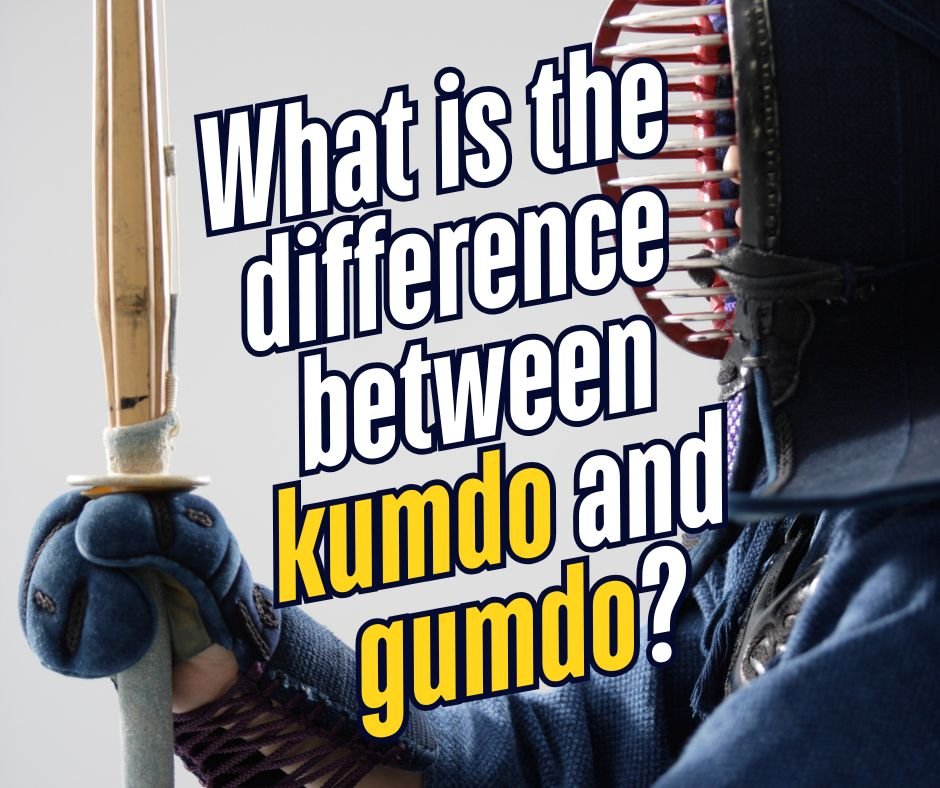
- Juk-do (Bamboo Sword): Lightweight and flexible, allowing safe full-contact sparring.
- Hogu (Protective Gear): Includes protective helmet (ho-myeon), chest armor (kap), gloves (ho-wan), and waist protection (kap-sang).
This equipment allows practitioners to practice realistic combat safely and effectively.
What is Gumdo (Haidong Gumdo)?
Gumdo, specifically Haidong Gumdo (해동검도), translates similarly as "the way of the sword," but emphasizes traditional Korean martial arts techniques, forms, and philosophies. Gumdo training aims to preserve and promote Korea's historical martial arts heritage, combining physical practice with philosophical teachings and meditation.Unlike Kumdo, Gumdo places greater focus on individual technique, traditional forms (hyung), and mental discipline.
Training in Gumdo: Techniques and Methods
Gumdo training emphasizes traditional Korean martial arts practice, focusing on:
- Forms (Hyung): Practitioners learn detailed, choreographed movements designed to simulate real combat scenarios.
- Cutting Techniques (Beggi): Advanced students practice controlled cutting movements using sharp swords, typically on targets like bamboo or rolled straw mats.
- Philosophy and Meditation: Gumdo training integrates meditation and philosophical teachings to develop mental discipline, balance, and harmony.
For instance, practitioners frequently perform "Ssang Soo Gumbup," a traditional form emphasizing fluid movements, powerful cuts, and seamless transitions between techniques.
Equipment Used in Gumdo
Gumdo practitioners use equipment tailored to traditional practice and forms:
- Mok Geom (Wooden Sword): Used primarily for practicing forms and basic techniques safely.
- Jin Geom (Real Sword): Advanced practitioners use sharp swords for precise cutting exercises.
Gumdo generally does not involve full-contact sparring. Instead, the training emphasizes mastery of traditional forms and precise cutting.
Historical Background of Kumdo and Gumdo
To clearly understand the difference between Kumdo and Gumdo, it's helpful to consider their historical context and development in modern Korea.
Kumdo’s Historical Background
Kumdo emerged as a modern martial art in Korea, becoming increasingly popular in the mid-20th century. It evolved as a structured, competitive discipline, widely practiced in martial arts schools and universities throughout Korea.Over time, Kumdo developed standardized rules, training methods, and competitions, becoming one of Korea's most popular competitive martial arts.
Gumdo’s Historical Background
Gumdo, specifically Haidong Gumdo, emerged later in the 20th century as a distinct Korean martial art aiming to revive older swordsmanship traditions. Martial arts masters developed Gumdo to reconnect modern practice with Korea's historical roots, emphasizing traditional sword techniques, cultural heritage, and philosophical teachings.Today, Gumdo enjoys popularity among practitioners interested in traditional martial arts, philosophy, and cultural heritage preservation.

Philosophical Differences Between Kumdo and Gumdo
Philosophy significantly differentiates Kumdo from Gumdo. Each martial art emphasizes distinct values and goals.
Philosophy in Kumdo
Kumdo philosophy focuses on personal discipline, mental strength, and ethical behavior:
- Self-Improvement: Practitioners strive to overcome personal limitations through rigorous training.
- Mental Discipline: Kumdo training emphasizes overcoming hesitation, doubt, and fear, building mental resilience.
Philosophy in Gumdo
Gumdo philosophy emphasizes harmony, balance, and traditional Korean cultural values:
- Mental and Physical Harmony: Gumdo integrates meditation and philosophical teachings to develop mental discipline and inner balance.
- Respect for Tradition: Practitioners honor and preserve traditional Korean martial arts, emphasizing historical authenticity and cultural identity.
Practical Examples: Comparing Kumdo and Gumdo Techniques
Consider the practical approaches to sword techniques in each martial art:
| Technique | Kumdo Approach | Gumdo Approach |
|---|---|---|
| Cutting | Short, efficient, precise strikes for sparring | Wide, flowing, powerful cuts emphasizing form |
| Forms (Hyung) | Limited emphasis; primarily drills and sparring | Strong emphasis; detailed, traditional forms |
| Sparring | Central element; regular competitive training | Minimal or none; training emphasizes individual form |
Choosing Between Kumdo and Gumdo | Factors to Consider
When deciding which martial art suits you best, consider these factors:1. Personal Goals:
- Interested in competitive training and sparring? Kumdo is your best choice.
- Prefer traditional martial arts emphasizing forms, meditation, and philosophy? Gumdo suits you better.
2. Training Style Preferences:
- Enjoy dynamic, physically demanding sparring sessions? Choose Kumdo.
- Prefer slower, precise, and philosophical training with emphasis on traditional forms? Choose Gumdo.
3. Cultural Interests:
- Looking for a modern Korean martial art emphasizing competition? Kumdo matches your interests.
- Interested in traditional Korean martial arts, forms, and philosophical teachings? Gumdo fulfills these interests.
Common FAQs | Kumdo vs. Gumdo
Q: Are Kumdo and Gumdo entirely different martial arts?
A: They share common roots in Korean swordsmanship but have evolved distinctly. Kumdo emphasizes competitive sparring and efficiency, while Gumdo highlights traditional forms, cutting, and philosophy.Q: Can I practice both Kumdo and Gumdo simultaneously?
A: Yes, practicing both can provide broader martial arts insight. However, clearly understanding their differences helps avoid confusion between techniques and philosophies.Q: Which martial art includes competitions and tournaments?
A: Kumdo strongly emphasizes competitions, tournaments, and sparring. Gumdo primarily focuses on individual practice, forms, and cutting techniques.
Conclusion | Clearly Understanding the Difference
Understanding what is the difference between Kumdo and Gumdo helps you choose the martial art best suited to your personal goals. Kumdo offers dynamic, competitive training focusing on sparring and physical conditioning. Gumdo emphasizes traditional forms, cutting techniques, and philosophical teachings rooted in Korean cultural heritage.Both martial arts provide physical fitness, mental discipline, and cultural enrichment. The best choice depends entirely on your individual goals, interests, and training preferences.Ready to start your Korean swordsmanship journey? Choose Kumdo or Gumdo based on your personal preferences—and embrace the exciting path ahead!
Sources:
- Korean Kumdo Association
- World Haidong Gumdo Federation
- "Korean Martial Arts Handbook" by Glenn Stillwell